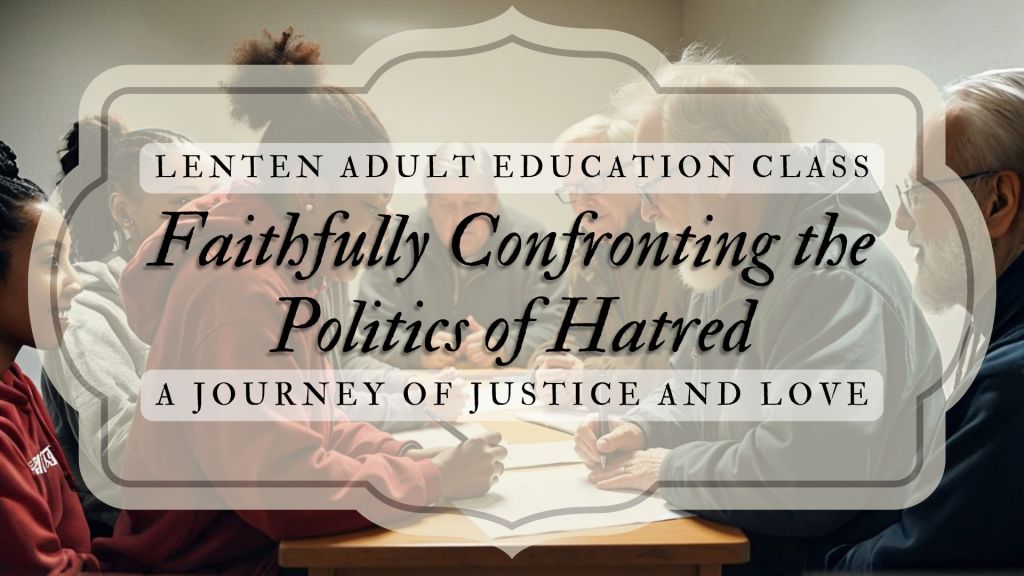
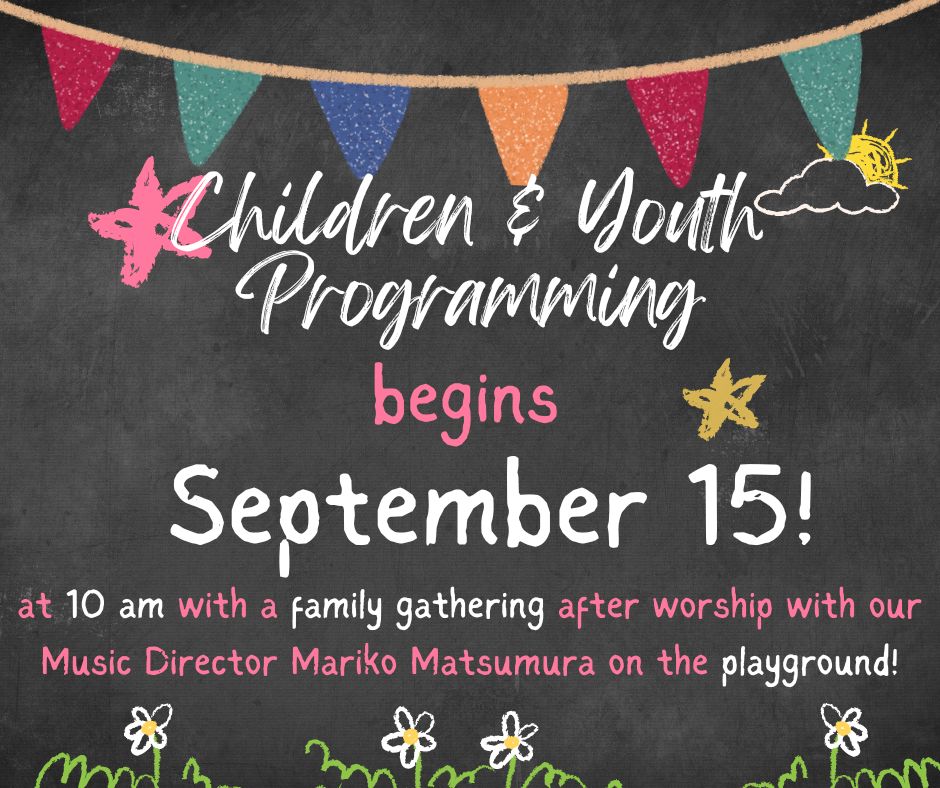
Have you ever come home just as your family is watching the tail end of a movie? You sit down to watch the dramatic climax with them but… Since you hadn’t seen the first part of the movie, you don’t understand what’s happening or why it’s a big deal. Everybody else, though, is on the edge of their seats and they are thoroughly satisfied when the credits start to roll. You, on the other hand, still don’t get it. Why? Because you weren’t invested in the story. You only saw the resolution of the plot, not how the story began or progressed. There are an awful lot of people who only come to worship on Easter Sunday and therefore only see “the end of the movie”. They experience the good news and joy of the resurrection but have not been a part of the earlier plot line. How did Jesus end up dead in the first place? Well, we all know he was crucified. Why did that happen? We really need to experience that part of the story with him if we are to fully appreciate his resurrection. This coming week here at FCC is an opportunity to experience the whole story. This Sunday is Palm Sunday and we enter the story of Jesus’ arrival in Jerusalem to acclimation and singing! Why did he enter Jerusalem this way? Why were people so excited? Come experience Act one, scene one! The following Thursday is called “Maundy Thursday.” “Maundy” means “commandment” and is the day when we recall Christ’s commandment that we “love one another” as he has loved us. We will worship at the Highlands Congregational Church with their congregation during which we remember the Last Supper he shared with his disciples, his crucifixion on the cross, and his time in the tomb. Act two, scenes one, two, and three! If you attend these two worship services and remain contemplative throughout the week, you experience the plot of God’s redemption in its fullness. You will feel, really feel, the difference between darkness and light, death and new life. The resurrection will then take on new meaning for you and by the end of the Easter worship service you will leave our Sanctuary transformed. Act three, scene one! Holy Week is a complete story. If you only come on Easter Sunday, you are only catching the tail end of a wild, heartbreaking, heartwarming, divine encounter. In fact, our entire faith is based on this week. To be faithful, then, it is not enough to just know the story and come for the conclusion. We need to experience it, all of it, and live it as best we can. Our worship services from Palm Sunday through Maundy Thursday to Easter Sunday give you that opportunity. You will only really know why Easter is such a “big deal” if you embark on the journey from start to finish. See you in church, Rev. Dominic This is the audio from Reverend Dominic’s sermon on 3/16 titled “We Are All Children of God.” His sermon is based on Paul’s letter to the Galatians 3:23-29 and is all about living in relationship to the “NPC” – Non Playable Character. “We Are All Children of God” And I invite you to hear these words from Paul’s letter to the Galatians: “Now, before faith came, we were imprisoned and guarded under the law until faith would be revealed. Therefore, the law was our disciplinarian until Christ came so that we might be reckoned as righteous by faith. But now, now that faith has come, we are no longer subject to a disciplinarian, for in Christ Jesus, you are all children of God through faith. As many of you were baptized into Christ, you have clothed yourselves with Christ. There is no longer Jew or Greek. There is no longer slave or free. There is no longer male and female. For all of you are one in Christ Jesus. And if you belong to Christ, then you are Abraham’s offspring, heirs according to the promise.” Here ends our scripture lesson for this morning. May God add a blessing to the reading and to the hearing of these holy words. As we continue through this Lenten season, I want to affirm this morning an important truth. And it’s right there in the title of the sermon: We are all children of God. Now, that may seem obvious, but apparently, it’s not to some. A passage we heard from Genesis says, “So God created humankind in God’s own image. In the image of God they were created. Male and female, God created them.” That is not a conditional statement. It does not say that some were created in God’s image. It does not say only the powerful, only the rich, only the well-connected, only the well-known. It says it all. It says everybody. Now, we all know that we live in a very Lenten wilderness time right now when it comes to division and dismantling and how this is affecting people’s lives and affecting people’s families. My wife pointed out to me something that I was unaware of and it amazed me: there are those in power today who refer to those who disagree with them or who oppose them as NPCs. Now, you know what an NPC is, if you’re not into online gaming or computer gaming. So I had to look this up. An NPC is a non-playable character. These are background characters in a video game that are not controlled by the player. They follow scripted patterns, repeating the same short phrases. They exist only to serve the experience. Think of that one guy in a video game who only ever says, “Welcome traveler,” no matter how many times you walk up to them. Here’s the danger. When people in the real world begin referring to others as NPCs (non-playable characters), they’re claiming that those people lack independent thought. They’re saying that they have no real agency. They’re saying that they’re just background. They’re saying that they don’t matter. They’re saying that they are not really human. This is a symptom of an old and very awful lie. The same one whispered by Pharaoh to justify the enslavement of the Israelites. The same one used to justify colonialism and slavery and apartheid and segregation. It’s a lie that wells up from the pit of hell and says some people are less real, less human, less valuable than others. If they’re not real, if they’re background, if they’re not actually players, not actually people, then what does it matter if we slash this program or that program? Things that people rely on to feed themselves, to keep themselves warm, to pay for their medications. What does it matter? You’re just an NPC. This is about dehumanization. This is about arrogance. This is about indifference and hatred. In this Lenten season in particular, I feel the need to name this lie and this sin for what it is. It strips people of their humanity and their dignity—the dignity that God has given them. And if you say it often enough, people start to forget their own sacred worth. The same mindset that calls somebody an NPC is the mindset that allows governments to ignore the cries of the suffering. It enables corporations to exploit workers. It justifies racism and classism and indifference to the plight of the least of these among us. But you remember what Jesus said? “Truly, I tell you, whatever you do to the least of these, my brothers and sisters, you do it to Me.” So when we reduce people to non-playable characters, we’re reducing Christ Himself. When we dismiss their experiences as programmed or predetermined, we dismiss the reality of God’s work in their lives. This passage from Galatians says there is no longer Jew nor Gentile. There is no longer slave nor free. There is no longer male or female. Why? Because you’re all one in Christ Jesus. And if we’re all one in Christ Jesus, then nobody is an NPC. Nobody is disposable. Nobody is unimportant. A Call to Action This trend of dehumanization is the same sin that fueled the religious elite to look down upon Jesus when He sat with tax collectors and the outcasts. It’s the same sin that led people to mock prophets and ignore the cries of the widows and the orphans. If there are demons to be cast out this Lenten season, this has got to be one of them. It needs to be cast out so that we can return to the truth that every human being is a gift. Every human being is wonderfully made. Every human being is beloved in the sight of God. So what do we do? What do we need to do? Reject Dehumanizing Rhetoric: We need to reject this rhetoric whenever we see it, whether it’s online or in our daily lives. We need to call out the sin of dehumanization wherever it rears its head. See Christ in Others: We need to actively see Christ in others and listen, truly listen, especially to those who are being cast aside right now. We need to advocate for the marginalized. We need to fight for justice by proclaiming the inherent worth of every human being. Self-Reflection: Ask ourselves if we sometimes dismiss people. Are we immune to judgmentalism? Have you ever caught yourself about to dismiss somebody as a non-playable character? Pray: We need to pray for the scales to fall from the eyes of those who perpetuate this lie. We need to pray for our own hearts to remain soft, for our love to be unwavering, and for our courage to never fail in these times. Let me say it again. We are all created in God’s image. We are all deeply loved, and no one, no one is an NPC. So let’s go forth into this day with that truth. Let’s go forth today to boldly proclaim the dignity of all people. Let’s go forth today standing against every force that seeks to diminish the sacred worth of our fellow human beings. O holy God, You created each of us and all of us in Your image. And Your image is multicolored. Your image comes in many sizes, speaks many languages, and brings many different gifts. We are all made in your image and we are all valued. We all matter. Bless our church to be a place that celebrates your diversity and stands firm against the dehumanization of one another. In Jesus’ name we pray, Amen. Join Rev. Dominic after worship each Sunday (which begins on March 9th) of the Lenten Season for this faith-based class to help navigate the challenging times in which we live. Each session will include a scripture lesson, a short presentation by Rev. Dominic, group discussion, and a “Lenten fast challenge” for the week. Please let us know if you would like childcare: info@fccmelrose.org One of the things I like most about our church is that we honor our rich Christian heritage by proclaiming that it is not frozen in time. I like to think that this comes from our understanding of Jesus’ words about his ministry in Matthew 11:29-30: “Take my yoke upon you and learn from me for I am meek and humble in heart and you shall find rest for your souls; for my yoke is easy and my burden is light.” Jesus’ “yoke” is easy and his “burden” is light unlike the weight of traditional understandings of faith that wallow in guilt, sin, and a celebration of rules. The Christian faith, after all, is intended to be liberating not confining. The United Church of Christ famously says that “God is still speaking.” The UCC Constitution says that “It is the duty of every Christian to make this faith their own in word and deed” in every generation. In other words, it’s okay to color outside the lines in our church when it comes to images of God, understandings of scripture, and what defines a Christian person. I think that’s vital to spiritual growth. If we are to navigate the waters that lie ahead in our country and in our world, we will need to be creative and that includes having the courage to define and redefine what it means to be a person of faith. First Congregational is a place where you are encouraged to do just that as we strike a balance between finding solace in our traditions while exploring new pathways of divine encounter that leads to action in the world. See you in church, –Rev. Dominic Children and youth from Nursery through High School are invited and encouraged to join us on Sunday mornings at 10AM. Just like in years past, young people will remain in “big church” until after the Children’s Sermon, and then depart for special, age-appropriate programming. Jose Perea (and Sophie) will be back in the Nursery for our youngest children–infants and pre-kindergarten ages–and parents are welcome to bring them there before worship. Parents/Grandparents/Aunts & Uncles are also welcome to remain in the Nursery if they wish, or join the worship service in the Sanctuary. We will continue to broadcast the service in the Narthex, too. Darby Drafts and John McGrath will continue to meet with our middle and high school youth, and each week our youth engage in conversation relating to current events, issues affecting young people, the world around us, and community engagement. Weekly discussions are usually tied to the lectionary bible text for that week, bringing a new understanding, interpretation, and relevance to scripture. New this fall, Barbara Krol-Sinclair will lead the class for grades k-2, and Jim Oosterman will be leading the class for grades 3-5, both supported by a second adult from our congregation. Our primary focus for this fall will be on building community and collaboration, understanding the wider & global community, and empathy. These are issues for our growing children, but will be presented in understandable, fun and engaging ways. We’re already planning for Advent and a special focus that has great importance in our world today. Watch for that news later in the fall. We hope that all young people in our church will join us starting September 15th! Join Mariko on the Church Playground after worship on Sunday, September 15th! This will be a great opportunity for both parents and children to get to know our Music Director, share your interests, and meet other families. Refreshments will be provided and there will be take-aways for the kids. In case of rain, the gathering will be in the Church Library. See you there! Welcome Back Sunday! September 8th Join us for a fresh new program year here at First Congregational Church as we re-gather for another great year of sharing, learning, worship, and service as we deepen our faith and make it relevant in today’s world! See you soon! Welcome to my annual “Don’t-Forget-About-The-Church-While-We-Break-For-The-Summer” message! It’s a universal message because clergy have universal concerns at this time of year. Concerns like: How badly will finances slump over the summer? Do people understand why we “take the summer off”? Will people actually come back in the fall? Let me answer each one of those really quickly because I think we all share them. Finances. Will they slump? Not if we don’t let them! If you are not part of our automatic debit program, Vanco, make sure to keep you financial giving to FCC up to date. This will mitigate the panic that our finance people can experience in the fall when we see they see the numbers go askew. Why do we take this break? A couple of reasons. Like most suburban cities, Melrose empties out in the summer with people going to the Cape or up to Maine. Even the Summer Union Services of the past have been hard to maintain. Rather than fight this reality, we take advantage of it as a way of giving our church a rest instead of than fighting to maintain things through July and August. Additionally, church staff is encouraged to only take vacation time during the summer and not during the program year (my agreement with the church specifically includes this clause about vacation and continuing education time). Consequently, church staff is necessarily away and rather than hire pastoral, musical, and office staff coverage, we create this period of rest for the church as a whole. Lastly, will people be back in the fall? You’d better! There will be a lot going on and we will hit the ground running with all hands on deck to lift our next program year off the ground in September. I hope that you take advantage of this summer change-in-pattern at our church for what it is: a respite-time when you can reconnect to stillness and remember that being is, in the end, more important than doing. Have a wonderful summer everyone! –Rev. Dominic “The fear of the Lord is the beginning of wisdom,” says Proverbs 9:10-12. One of the most troubling things in the bible for a lot of people is the idea that we are called to “fear the Lord”. How can that be? I mean, isn’t our God a loving God who seeks relationship with us and longs for us to share a spirit of compassion with the world? Why would we fear God? Part of the problem with this and other references to fearing God in the bible is that they come from the Hebrew language and we tend to assign a narrow English meaning to Hebrew words in general. Compared to English, Hebrew has very few words. English has around three-quarters of a million words, all told. Hebrew on the other hand has around 85,000. It is because English has so many words that we give each one a relatively narrow meaning. Hebrew, having comparatively fewer words, can assign multiple meanings to each word. The word for “fear” is a good example. In English, that word means to recoil in dread or terror. In Hebrew, the word is “yare.” It can mean to be afraid of something but it can also mean to revere something (or someone). It can also mean astonishment or awe or honor. If we take that broader meaning and apply it to the Proverbs verse, it becomes: “Reverence for the Lord is the beginning of wisdom.” I believe that’s more accurate because it takes away the idea that there is some awful punishment ready to be meted out if we “disobey” our divine parent. God, for me at least, doesn’t work that way. This concept appears in the New Testament, too. The New Testament was written in Greek and the Greek word for “fear” is “phobos”. Interestingly, this word, like “yare”, can mean to be afraid but it can also mean awe and reverence as well. The English “fear” makes sense in, say, 1 John 4:18: There is no fear (phobos) in love; but perfect love casts out fear (phobos), because fear (phobos) involves punishment, and the one who fears (phobeó) is not perfected in love.” The English “awe,” however, works better in, say, Acts 2:43: Everyone kept feeling a sense of awe (phobos); and many wonders and signs were taking place through the apostles.” In the end, the plethora of English words narrows the definitions we assign to them unlike in Hebrew or ancient Greek where multiple meanings are assigned to each word. The bottom line? We rightly run away from things we fear and we rightly draw close things we are in awe of. We should never fear God. Instead, we should draw close to God in reverence and awe because of the unending love that God offers. See you in church, –Rev. Dominic The day before the start of Lent, Ash Wednesday, is called Shrove Tuesday. It is also called Marti Gras and Fat Tuesday; the latter two being about celebrating before the six weeks of fasting and penitence that is Lent. Shrove Tuesday was originally a Christian religious day when one “strove to be shrove” so to say (just came up with that one, feel free to use it!). That is to say, “shrove” comes from the word “shrive” meaning to confess one’s sins and be absolved. The goal was to be “shriven”—having confessed and been forgiven. This certainly is an overarching theme and goal of the season of Lent. Every year, however, this seems like an oversimplification of Lent. Every year, I feel the need to re-define this important season because people avoid it (and church) because they don’t want to get lost in a spirituality of guilt and penance. So what is Lent? Lent is an ancient Christian season lasting six weeks until Easter. It is forty days long but does not include Sundays. This is because while the season of Lent is to be used to introspectively evaluate one’s self with an eye to our inadequacy and sin, every Sunday is to be thought of as a “mini-Easter”. Lent begins with Ash Wednesday during which the tone is set for a season of confession and a striving to find solidarity with Christ’s suffering on the cross. The culmination of this season is Holy Week which begins with Palm Sunday and includes Maundy Thursday’s remembrance of the Last Supper, Good Friday’s remembrance of the crucifixion of Christ, Holy Saturday’s vigil at the tomb of Christ, and Easter Sunday’s welcome of the resurrection. During Lent people traditionally give things up that inhibit their connection to God. This is often indulgences of one kind or another. All of that said, what is at the heart of Lent? Quite simply, it is an invitation to draw closer to God and renew your relationship with your divine companion in this life; Jesus Christ. It is a time of spiritual evaluation and a time of enacting the ministry of Christ in meaningful ways through acts of service. Lent needn’t be a downer. I pray that it is for you, instead, a rewarding time of faith formation. See you in church, –Rev. DominicThe transcription follows:
Sermon
The Danger of Dehumanization
The Consequences of Dehumanization
Closing Prayer

 First Congregational Church in Melrose, UCC