Narrated by David Reichard
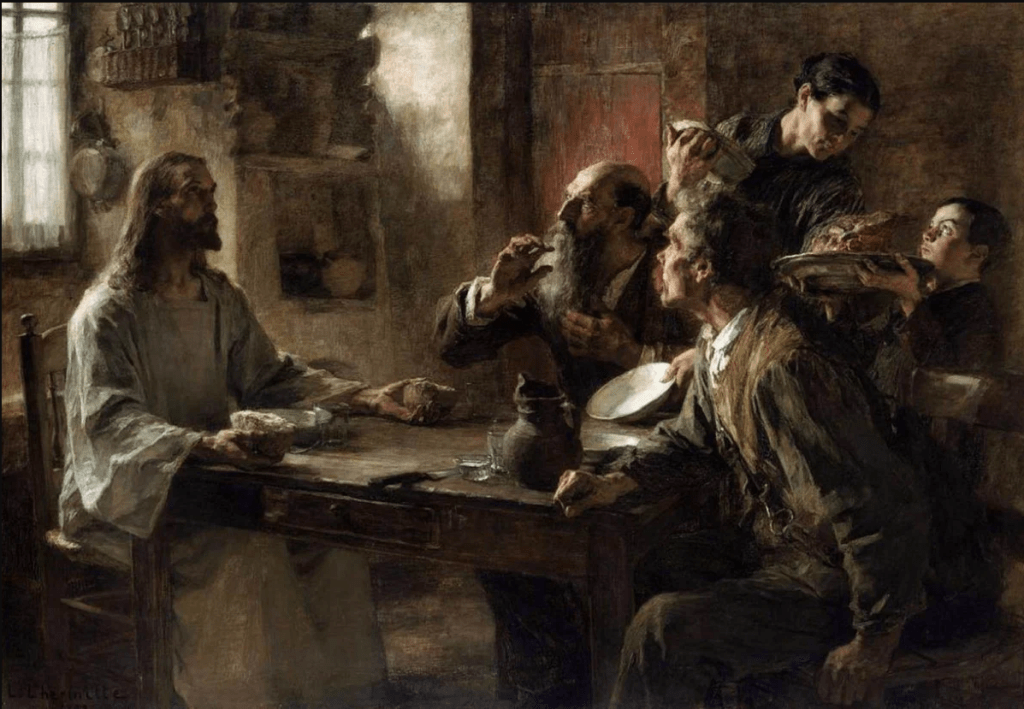
In the chapel, we hold a replica of the 1892 oil painting “Supper at Emmaus” by Léon-Augustin Lhermitte, which is a remarkable example of 19th-century French realism. The artwork portrays the biblical moment when the disciples of Jesus recognize him after his resurrection, during a dinner in Emmaus.
The original was commissioned by the French government for exhibition at the 1878 World’s Fair in Paris, the painting was awarded a gold medal and subsequently acquired by the state for the Louvre Museum’s collection. An intriguing aspect of the work is that Lhermitte used his friends and family members as models for the characters in the scene. Additionally, the painting underwent a significant restoration process in the 1970s, after sustaining damage during World War II.
Our copy was obtained from the Museum of Fine Arts in Boston. The painting reportedly hung in the Parlor of our former church building and was removed following the fire – that portion of the building having not suffered the bulk of the fire or smoke damage. Additionally, the original is now in the permanent collection of the Museum of Fine Arts in Boston.
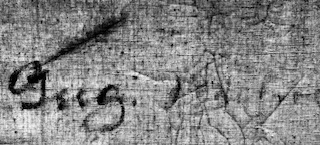
On the rear side of the canvas, the painting is officially marked “copied from painting in the gallery.” The nearby signature on this replica seems to read Greg Mcintyre.

You can read more about the scripture reference from “The Walk to Emmaus” in the following passage of Luke 24:13-35 below, taken from the NRSV Bible.
“Now on that same day two of them were going to a village called Emmaus, about seven miles from Jerusalem, and talking with each other about all these things that had happened. While they were talking and discussing, Jesus himself came near and went with them, but their eyes were kept from recognizing him. And he said to them, ‘What are you discussing with each other while you walk along?’ They stood still, looking sad. Then one of them, whose name was Cleopas, answered him, ‘Are you the only stranger in Jerusalem who does not know the things that have taken place there in these days?’ He asked them, ‘What things?’ They replied, ‘The things about Jesus of Nazareth, who was a prophet mighty in deed and word before God and all the people, and how our chief priests and leaders handed him over to be condemned to death and crucified him. But we had hoped that he was the one to redeem Israel. Yes, and besides all this, it is now the third day since these things took place. Moreover, some women of our group astounded us. They were at the tomb early this morning, and when they did not find his body there, they came back and told us that they had indeed seen a vision of angels who said that he was alive. Some of those who were with us went to the tomb and found it just as the women had said; but they did not see him.’ Then he said to them, ‘Oh, how foolish you are, and how slow of heart to believe all that the prophets have declared! Was it not necessary that the Messiah should suffer these things and then enter into his glory?’ Then beginning with Moses and all the prophets, he interpreted to them the things about himself in all the scriptures.
As they came near the village to which they were going, he walked ahead as if he were going on. But they urged him strongly, saying, ‘Stay with us, because it is almost evening and the day is now nearly over.’ So he went in to stay with them. When he was at the table with them, he took bread, blessed and broke it, and gave it to them. Then their eyes were opened, and they recognized him; and he vanished from their sight. They said to each other, ‘Were not our hearts burning within us while he was talking to us on the road, while he was opening the scriptures to us?’ That same hour they got up and returned to Jerusalem; and they found the eleven and their companions gathered together. They were saying, ‘The Lord has risen indeed, and he has appeared to Simon!’ Then they told what had happened on the road, and how he had been made known to them in the breaking of the bread.
 First Congregational Church in Melrose, UCC